For anyone told they have fatty liver: what a European trial adds about whether the inflamed form is felt day to day, and why the answer is still tentative.
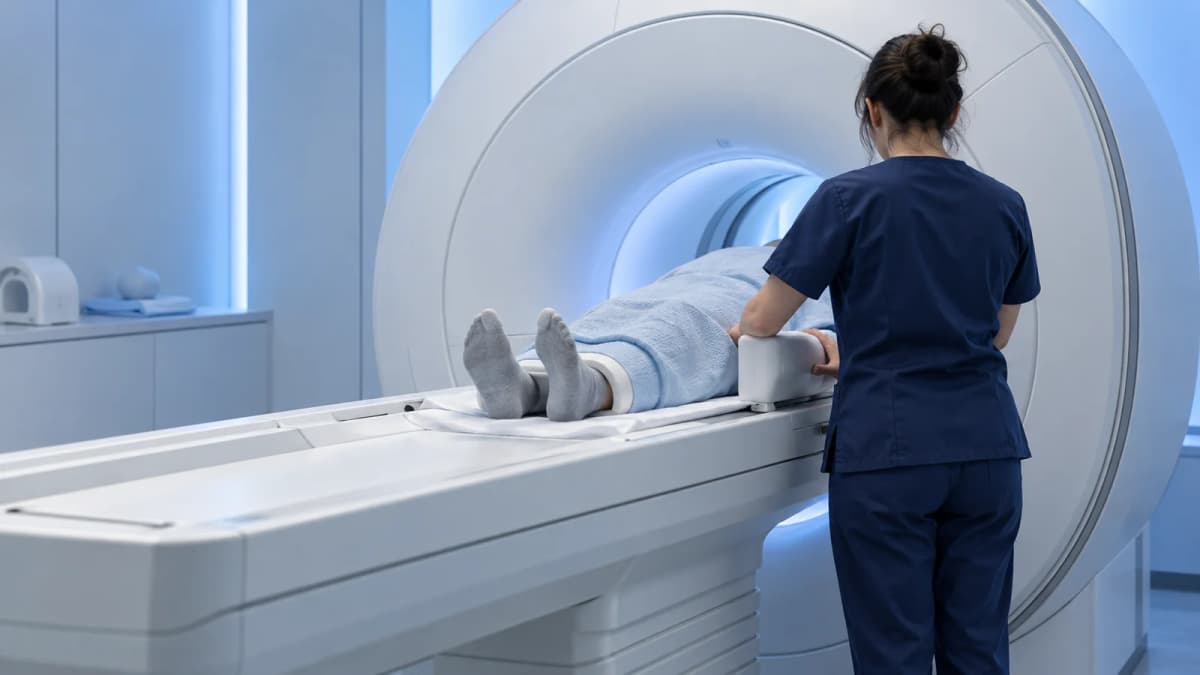
On 22 October 2026 the journal Quality of Life Research published a new analysis of RADIcAL-1, a randomised trial run in 2017–2020 in Germany, the Netherlands, Portugal and the UK. It enrolled 802 adults (453 men) whose doctors suspected metabolic dysfunction-associated steatotic liver disease, or MASLD: fat in the liver together with at least one cardiometabolic risk factor, such as excess weight or diabetes, and without harmful alcohol intake. Participants were randomly assigned either to a multiparametric liver MRI (LiverMultiScan) or to the usual care of their clinic. Every participant also filled in a standard quality-of-life questionnaire, the EQ-5D-5L, at the start and again after 2, 6 and 12 months.
A scan reading was set against how people rated their own lives
MASLD covers a spectrum, from fat build-up alone (steatosis) to metabolic dysfunction-associated steatohepatitis (MASH), fibrosis and cirrhosis. In this trial MASH was not diagnosed by biopsy: it was defined by an MRI reading of liver tissue called corrected T1 (cT1), at 800 milliseconds or more, with "high-risk MASH" at 875 ms or more. Liver fat was counted as raised at a proton density fat fraction of 10% or more.
The researchers then compared, within the MRI group, what people with scan-defined MASH and those with MASLD without MASH reported about mobility, self-care, usual activities, pain or discomfort, and anxiety or depression, plus an overall rating of their health.
Those the scan classed as MASH reported worse quality of life
People in the MASH category scored lower on every one of the five questionnaire areas and on the overall rating than people with MASLD without MASH. The gap remained after adjustment for age, obesity, diabetes and high blood lipids. People with high-risk MASH reported up to 12% more problems across all five areas than everyone else.
Higher cT1 values were associated with 29% higher odds of reporting anxiety or depression. Each 80 ms rise in cT1 went with a 0.023-point fall in the EQ-5D utility score (p = 0.039). Baseline scores differed between sites, from 0.81 in Coimbra to 0.90 in Ulm.
What the study does not show
This is an association within one arm of a trial, not a test of whether scanning helps. Between the MRI arm and usual care, reported quality of life did not differ. The analysis cannot say that inflammation in the liver causes the worse scores: people with more advanced liver disease may differ in ways the four adjustments did not capture. MASH here means an MRI threshold, not a biopsy diagnosis. Follow-up was disrupted by COVID-19, and the share of people who returned the 12-month questionnaire ranged from 22% to 81% across sites.
The trial was sponsored by the company Perspectum; three of the authors are its employees and one is a consultant. The trial's registered primary outcome was different: the proportion of participants with liver-related hospital consultations and/or liver biopsies over one year, framed as a question of cost-effectiveness. The new paper's abstract reports quality-of-life findings, not that outcome.
How fatty liver is usually assessed today
The joint European guideline on MASLD (EASL, EASD and EASO, 2024) recommends looking for liver scarring with non-invasive tests in people with metabolic risk factors, starting with a blood-based score such as FIB-4 and moving, if needed, to imaging such as transient elastography. If you have been told that you have fatty liver, it is reasonable to ask how inflammation and scarring were assessed and what the next check will be; discuss it with your doctor.
This material is for information only and does not replace a consultation with a doctor. Nothing in it is a recommendation to start, stop or change treatment.
Sources
Shumbayawonda E, et al. Patients with MASH experience worse health-related quality of life: a multinational real-world study using LiverMultiScan. Qual Life Res. 2026. PMID 42911297
RADIcAL1 — Non-invasive Rapid Assessment of NAFLD Using Magnetic Resonance Imaging With LiverMultiScan. ClinicalTrials.gov. NCT03289897
European Association for the Study of the Liver (EASL), et al. EASL-EASD-EASO Clinical Practice Guidelines on the management of MASLD. J Hepatol. 2024. PMID 38851997
What this piece relies on
Cards
Articles in this section are educational and are not medical advice, a diagnosis, or a prescription. Consult a qualified professional before acting on anything you read here.
Read next
 ResearchSleep
Hour-long daily naps linked to higher odds of death in older adults
A four-year study of older adults in Vietnam separates short naps from long habitual ones and shows how night sleep changes the picture, drawing a clear line between a warning sign and a proven cause.
5 min read ResearchMedicine and treatment
Kidney decline nearly halted in a phase 3 trial — plus 2 more stories
3 stories this week: an immune kidney disease, sleep apnoea with excess weight and AI that reads chest scans, each with who was studied and where the evidence stops.
5 min read ResearchMedicine and treatment
When kidneys fail in the ICU, the first dialysis method may matter
For families facing a decision in intensive care: what a new French trial can, and cannot, add to a conversation with the care team about supporting failing kidneys.
4 min read