VO2max: Why Cardiorespiratory Fitness Predicts Longevity
Of all the numbers you can track, few predict long-term health as strongly as VO2max. Here is what it measures, why fitness maps so tightly to lifespan, and how the number moves.
VO2max is the maximum rate at which your body can take in and use oxygen during hard exercise. It is the standard measure of cardiorespiratory fitness — how well your heart, lungs, blood and muscles work as one system — and in large studies it is among the strongest single predictors of long-term health there is.
What VO2max actually measures
Expressed in millilitres of oxygen per kilogram of body weight per minute (mL/kg/min), VO2max captures the ceiling of your aerobic engine: the most oxygen your working muscles can extract and burn when you push near your limit. Because that depends on the whole chain — lungs pulling in air, heart pumping blood, blood carrying oxygen, muscles using it — a single number reflects the health of the entire system.
It is not fixed. VO2max tends to decline by roughly 10% per decade from around age 30 in untrained people, but training can slow, halt or partly reverse that trajectory — which is what makes it worth tracking.
Why it predicts longevity
Large cohort studies consistently find a strong, graded link between higher cardiorespiratory fitness and lower risk of death from any cause: the fitter the person, the lower the risk, with no clear point of diminishing returns (Mandsager et al., 2018). The effect is large enough that the American Heart Association argued fitness should be treated as a clinical vital sign, measured like blood pressure (Ross et al., 2016).
Being in the lowest-fitness group carries a mortality risk on a scale comparable to established risk factors — which is why VO2max is so widely watched in longevity work, even though it is a correlate, not a guarantee.
How it's measured
The gold standard is a graded exercise test with breath-by-breath gas analysis (a CPET) in a lab, where oxygen use is measured directly as intensity ramps up. It is accurate but requires equipment and effort.
Most people meet VO2max through an estimate instead — from a smartwatch, a submaximal treadmill or bike test, or a timed walk/run. Estimates are less precise than a CPET and can differ between devices, so the useful signal is the trend in your own number over months, not a single reading or a cross-device comparison.
How to raise it
VO2max responds to aerobic training. In the research, the combination that tends to work is a base of easier, sustainable aerobic work plus regular bouts of higher-intensity effort, built up gradually and kept consistent over months rather than chased in a few hard weeks.
This is general education, not a training prescription. Fitness, health status and safe intensity vary from person to person — check with a qualified professional before starting or intensifying exercise, especially if you have any cardiovascular condition.
References
Mandsager K. et al. (2018). Association of Cardiorespiratory Fitness With Long-term Mortality. JAMA Network Open.
Ross R. et al. (2016). Importance of Assessing Cardiorespiratory Fitness in Clinical Practice: A Scientific Statement From the American Heart Association. Circulation.
Kodama S. et al. (2009). Cardiorespiratory Fitness as a Quantitative Predictor of All-Cause Mortality and Cardiovascular Events. JAMA.
Articles in this section are educational and are not medical advice, a diagnosis, or a prescription. Consult a qualified professional before acting on anything you read here.
Read next
 ExplainerMedicine and treatment
Flat feet in children and adolescents: when to observe, when to treat, and what the evidence shows
In most children a flat foot is a shape, not a disease: the arch matures on its own in the first decade. What decides is whether the foot is flexible and whether it hurts. What the insole trials showed, how a rigid foot differs from a flexible one, when surgery is discussed at all, and what to ask the orthopaedic surgeon.
16 min read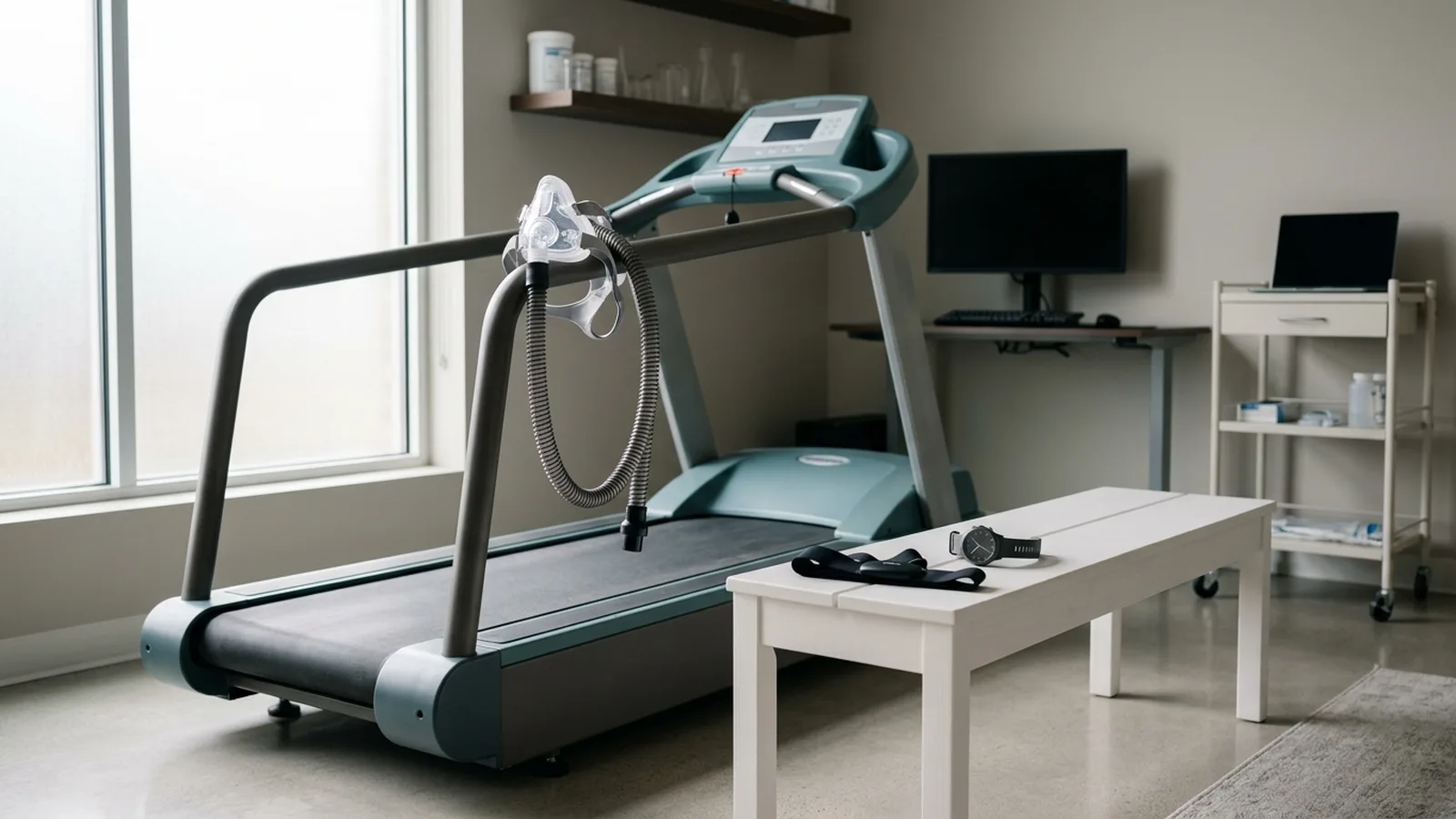 ExplainerBiomarkers
What limits VO2max — lungs, heart or muscles — and how accurate the estimates are
VO2max is often described as a measure of the lungs. In healthy people the ceiling is set mostly by how much oxygen the heart and blood can deliver; the lungs become the limit only in particular situations. What changes with age, and how accurate lab tests, formulas and watches are.
12 min read ExplainerSleep
Mouth breathing during sleep in children: why it is not a habit, and what the treatment evidence shows
An open mouth at night usually means breathing through the nose or throat is harder, but the sign alone does not make a diagnosis. How sleep-disordered breathing in children and teenagers is confirmed, what trials of adenotonsillectomy, medicines, nasal treatment, orthodontics and exercises found, and where evidence is still missing.
15 min read