Mouth breathing during sleep in children: why it is not a habit, and what the treatment evidence shows
An open mouth at night usually means breathing through the nose or throat is harder, but the sign alone does not make a diagnosis. How sleep-disordered breathing in children and teenagers is confirmed, what trials of adenotonsillectomy, medicines, nasal treatment, orthodontics and exercises found, and where evidence is still missing.
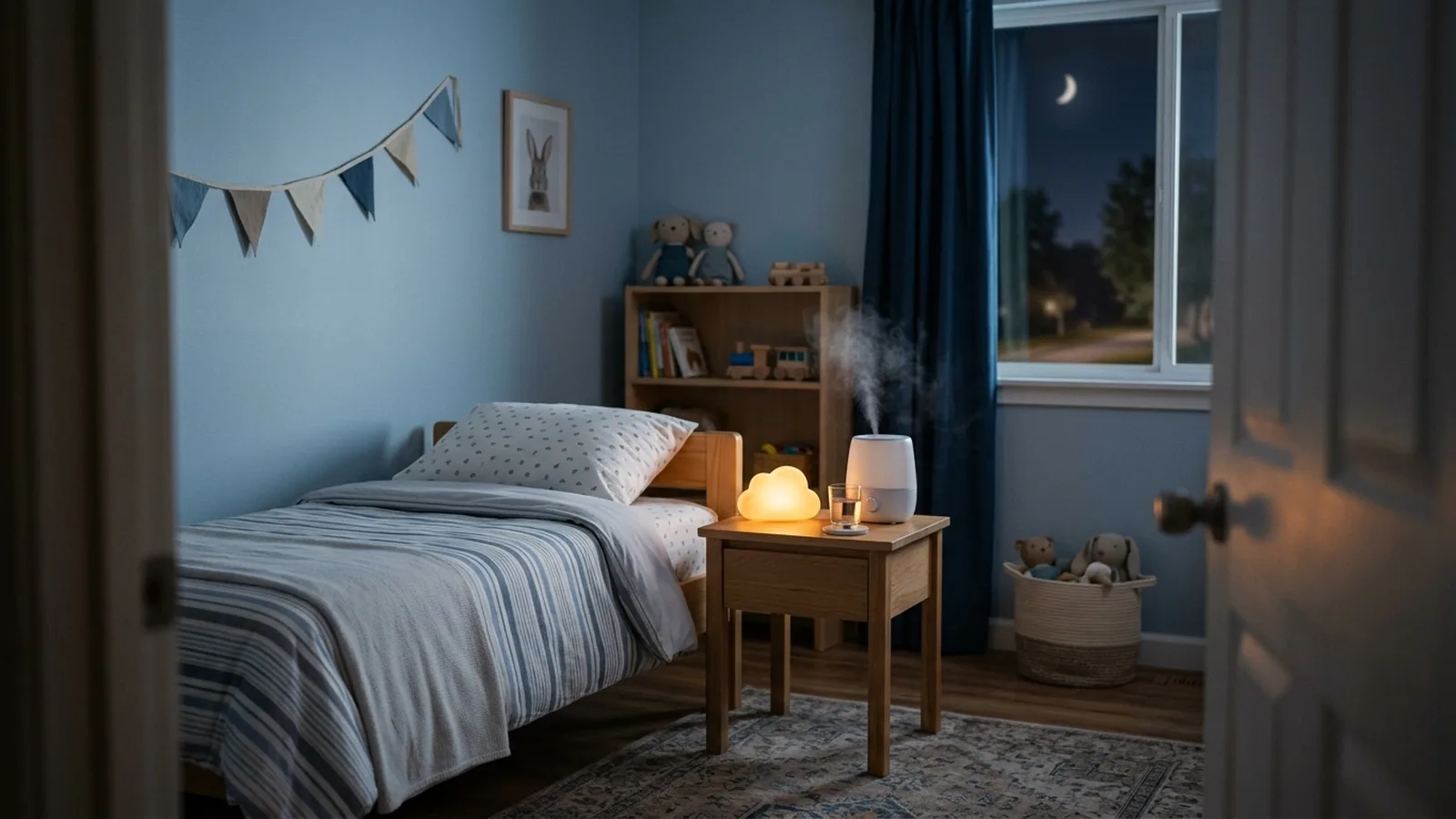
When a child sleeps with their mouth open, it is usually put down to habit. But air goes through the mouth at night mostly because the route through the nose or throat is harder: enlarged adenoids and tonsils, swollen nasal lining, a deviated septum, and in teenagers also excess weight. So mouth breathing during sleep is a reason to look at the airway, not at the child's character.
The symptom has another side that gets less attention. On its own it does not make a diagnosis: even among children already referred for removal of adenoids and tonsils, moderate or severe apnea was present in only about a third of those with marked mouth breathing, and what share of all children who breathe through the mouth during sleep have apnea was not measured in the studies found. Below is what is known about how this sign relates to sleep-disordered breathing, how the diagnosis is confirmed, which treatments have been tested in trials and in whom, and where the evidence is still missing.
From snoring to apnea: a spectrum, not one disease
Sleep-disordered breathing in children is described as a continuum (epidemiology review, PMID 18250218; European Respiratory Society statement for ages 2–18, PMID 26541535):
primary snoring — snoring without pauses in breathing and without drops in oxygen;
upper airway resistance syndrome — sleep is broken up by brief arousals even though the apnea index is low;
obstructive hypoventilation — shallow breathing with raised carbon dioxide during sleep;
obstructive sleep apnea (OSA) — repeated complete or partial blockage of the airway.
A diagnosis of OSA in a child is not made from snoring or from mouth breathing. The standard remains overnight polysomnography in a sleep laboratory (American Academy of Pediatrics guideline 2012, PMID 22926173).
How common it is
The figures depend heavily on where the line is drawn and who was examined.
In a systematic review of the epidemiology, OSA on diagnostic studies was found in 1–4% of children, and habitual snoring reported by parents in about 7% (PMID 18250218).
In a two-stage study of US elementary school children (questionnaires from 5,740, polysomnography in 700), breathing disturbance with an apnea-hypopnea index of 5 or more was found in 1.2%. Waist circumference and snoring were independently associated with it; nasal abnormalities with milder disturbance. Tonsil size on examination was not an independent factor (PMID 19544748).
In a comparable study of Hong Kong schoolchildren (6,447 questionnaires, 619 sleep studies), OSA by the criteria of the International Classification of Sleep Disorders, second edition (ICSD-2), was found in 5.8% of boys and 3.8% of girls, and depending on the cut-off the estimate ranged from 4.8% to 40.3% (PMID 20965935).
In other words, there is no single "true" percentage: the index threshold changes the estimate several-fold.
What the symptom itself tells you
Mouth breathing is a common and important sign that breathing through the nose or throat is obstructed. As a stand-alone predictor of apnea, however, it is weak.
A 1995 study compared 83 children referred for polysomnography: 48 with primary snoring and 35 with OSA. Parents reported daytime mouth breathing in 61% of the first group and 85% of the second. No item of the history, including this one, reliably told the two diagnoses apart; a clinical score was wrong in about one child in four (PMID 7656605).
A meta-analysis of ten diagnostic studies (1,525 children, polysomnography as reference) concluded that neither single symptoms nor their combinations have satisfactory accuracy (PMID 22886768).
The Pediatric Sleep Questionnaire (PSQ), which includes an item on mouth breathing, separated children with confirmed disorders from general paediatric patients with a sensitivity of 0.81–0.85 and specificity of 0.87 when it was developed (PMID 10733617). That was a comparison of patients with controls rather than a test in the general population, and it assessed the whole scale, not a single question.
In a meta-analysis of 39 studies (6,131 children aged 2.9–16.7), the same questionnaire had a sensitivity of 74% for mild OSA and 82% and 89% for moderate and severe OSA (PMID 32750654). It is not considered a substitute for polysomnography.
In a 2026 retrospective study of children already admitted for adenotonsillectomy, marked mouth breathing as a marker of moderate-to-severe OSA had a sensitivity of 82% with a specificity of 36%: only about one in three children with the sign had apnea of that severity (PMID 41917918).
The conclusion here is simple: the sign deserves to be taken seriously as a reason for assessment, but it can neither make nor rule out the diagnosis on its own.
How the diagnosis is confirmed
When polysomnography is needed. The American Academy of Pediatrics (2012) recommends asking all children and adolescents about snoring, and referring those who snore and have signs of OSA for overnight polysomnography, or, if it is unavailable, for alternative testing or to a specialist (PMID 22926173). The otolaryngology guideline on tonsillectomy in children aged 1–18 (2019) calls for polysomnography before surgery in children under two and in those with obesity, Down syndrome, craniofacial abnormalities, neuromuscular disorders, sickle cell disease or mucopolysaccharidoses, and also when the need for surgery is unclear or the examination does not match the reported symptoms (PMID 30798778).
Why children have different thresholds. In a child an obstructive apnea or a hypopnea is scored when it lasts at least two breaths, not ten seconds as in adults (American Academy of Sleep Medicine scoring rules, PMID 23066376; central apneas in children follow different rules). In adults an apnea-hypopnea index below 5 per hour is usually considered normal; in children, below 1. For ages 2–18 the European Respiratory Society considers treatment justified at an index above 5 regardless of other findings, and at 1–5 when there are consequences for the nervous system, heart and vessels, growth, bedwetting or quality of life (PMID 26541535). These thresholds are an expert consensus, not the result of a trial that matched a child's "unit of index" to adult risk.
Home testing. The American Academy of Sleep Medicine's 2017 position is that home sleep apnea testing is not recommended for diagnosis in children (PMID 28877820). In a small pilot study of children aged 2–17, a portable monitor at home detected disorders in about 70% of those in whom laboratory polysomnography detected them (PMID 28802385). The 2026 Canadian guideline allows a home test as a fallback in otherwise healthy children over five when polysomnography is effectively unavailable (PMID 41887281). That is permission for when there is no laboratory, not recognition of home testing as an equal replacement.
Children and teenagers are different stories
In preschool and younger school-age children the leading cause is enlarged adenoids and tonsils; that is the clinical consensus of the guidelines. In teenagers the picture differs, although no population study has broken down the contribution of tonsils, nose and weight by age.
In a retrospective study of 1,842 children and adolescents referred for polysomnography, the apnea-hypopnea index was higher in older groups: from 6.2 per hour at ages 3–6 to 9.9 at ages 15–18. The rise with age was seen only in boys; with obesity the index averaged 12.9 versus 4.9 (PMID 35304830). This is a clinical sample, not the population, and it does not establish causes.
In a multicentre study where polysomnography was done both before and after adenotonsillectomy (578 children, mean age 6.9), the index fell on average from 18.2 to 4.1 per hour, but fully normalised in only 27%. Residual apnea was associated mainly with age over seven and with body mass index (PMID 20448096). Only children who had both studies were included, so the study probably overstates the share with residual apnea.
In clinical samples of adolescents with severe obesity, OSA is very common: 19 of 34 before bariatric surgery (PMID 16076986). These are patients referred for treatment, not ordinary teenagers.
Which treatments have been tested, and in whom
Removal of adenoids and tonsils
This is the main treatment when they are enlarged, and there are two large randomised trials.
CHAT (464 children aged 5–9.9 with OSA without prolonged oxygen desaturation, 7 months of follow-up): early surgery versus watchful waiting. The primary outcome — attention and executive function on a neuropsychological test — did not differ between groups (gains of 7.1 and 5.1 points, p = 0.16). Parent-rated behaviour, quality of life, symptoms and polysomnography were better after surgery; polysomnography normalised in 79% of operated children and 46% in the waiting group (PMID 23692173). A separate analysis of the waiting group showed that within 7 months the polysomnographic abnormalities resolved on their own in 42% of children; this was more likely with a lower baseline index and normal waist circumference (PMID 25811889).
PATS (459 children aged 3–12.9 with habitual snoring and mild disturbance, obstructive index below 3, 12 months of follow-up): the primary outcomes — executive function and attention — also did not differ. Behaviour, sleepiness, symptoms and quality of life were better after surgery; blood pressure percentiles fell; progression to an index above 3 within a year occurred in 1.3% of operated children versus 13.2% in the waiting group. Serious adverse events related to surgery occurred in 6 children (2.7%) (PMID 38051326).
What these trials do not tell us: they included no teenagers over 13 and no children with severe oxygen desaturation. No randomised trial of surgery versus observation specifically in adolescents could be found.
If apnea remains after surgery. According to the American Academy of Pediatrics technical report, residual OSA occurs in 13–29% of low-risk children and in up to 73% in samples that include children with obesity under strict criteria (PMID 22926176). The 2024 American Thoracic Society guideline on such persistent apnea offers only conditional recommendations with very low certainty of evidence (PMID 37890009).
Anti-inflammatory medicines
A 2020 Cochrane review (5 randomised trials, 240 children aged 1–18 with mild to moderate OSA, 6 weeks to 4 months):
intranasal corticosteroids versus placebo — the estimate is uncertain, low-certainty evidence;
montelukast versus placebo — apnea-hypopnea index lower by an average of 3.4 events per hour, moderate-certainty evidence (PMID 31978261).
The review did not examine whether such treatment avoids surgery and did not assess long-term safety; the clinical significance of lowering the index by about three events per hour in children has not been established. Individual montelukast trials were done in children aged 2–10; one of them excluded children with obesity (PMID 22869829), the other did not (PMID 27439031). These studies include no data in adolescents.
In March 2020 the FDA added a boxed warning to montelukast about serious neuropsychiatric events — agitation, aggression, depression, sleep disturbance, suicidal thoughts and actions — in children, adolescents and adults. It is a required part of any discussion of the drug, and only a doctor prescribes it.
The nose: septum, turbinates, rhinitis
In adults, two meta-analyses of nasal surgery in sleep apnea gave different results for the apnea-hypopnea index: in one the change was not significant (10 studies, 320 people, PMID 26183522), in the other there was a moderate reduction across studies of mixed quality (18 articles, 587 people, PMID 28151900). Daytime sleepiness on the Epworth scale improved in both. These data do not carry over directly to teenagers.
Septal surgery in children has traditionally been postponed until nasal growth is complete, for fear of disturbing midface growth. A 2020 systematic review (8 publications) found no major growth disturbances, but its level of recommendation is no higher than C (PMID 32200434), and a 2024 American Rhinologic Society expert consensus considers the operation acceptable in children when indicated (PMID 38995326). No studies with polysomnography showing how septal or turbinate surgery changes the apnea index specifically in teenagers could be found.
Weight
In adolescents with severe obesity, the apnea index fell along with weight after bariatric surgery in small series: in 10 teenagers with repeat polysomnography the median fell from 9.1 to 0.65 per hour with an average weight loss of 58 kg (PMID 16076986). This is an observation without a control group. No randomised trials of weight loss through diet or lifestyle change with polysomnography in adolescents with OSA could be found.
Positive airway pressure (CPAP)
In a multicentre study of 29 children and adolescents (PMID 16510622), the device lowered the apnea-hypopnea index on average from 27 to 3 per hour, but about a third dropped out before six months, and those who remained used it for an average of 5.3 hours a night. Parents noticeably overestimated how much their child used it. The method works when it is used, and that is its main difficulty.
Orthodontics and exercises for the mouth muscles
Orthodontic and functional appliances. A 2016 Cochrane review found one eligible trial in 23 children and judged the evidence insufficient to support or refute the approach (PMID 27701747). A later meta-analysis reports a lower index after rapid maxillary expansion and mandibular advancement, but the level of evidence is low to very low, and the authors do not propose orthodontics as a stand-alone treatment for OSA without an orthodontic indication (PMID 36525781).
Myofunctional therapy. In a meta-analysis of 10 studies in 241 children, the index fell on average from 4.3 to 2.5 per hour, with widely varying exercises and no large blinded randomised trials (PMID 32861058). Whether it treats moderate or severe apnea as the only treatment has not been shown.
Mouth taping
No published studies in children could be found: in a 2025 systematic review, all included studies were in adults. Studies in adults are small: in a preliminary study of 20 adults with mild apnea who tolerated taping, the index fell on a home device, with no control group (PMID 36141367). A 2025 systematic review (10 studies, 213 people) describes both a lack of effect in some studies and risk when the nose is blocked (PMID 40397877). For a child whose nasal breathing is obstructed, it is not a treatment but a way of closing the only available airway.
What sleep-disordered breathing is linked to
Behaviour and attention. Observational studies do show an association with hyperactivity and inattention. But in both trials surgery did not improve objectively measured attention and executive function; behaviour improved on ratings by parents who knew whether their child had been operated on (PMID 23692173, 38051326).
Blood pressure. In PATS, systolic and diastolic blood pressure percentiles fell more after surgery than with observation — one of the few experimental results on blood pressure in children, although as a secondary outcome (PMID 38051326).
Growth. In a literature review, growth failure was more frequent in children with sleep-disordered breathing, and catch-up growth was often seen after surgery; there are no randomised data (PMID 16460816).
Face and bite. In an orthodontic sample of 116 children, mouth breathers had a lower and more backward-positioned lower jaw and a different bite (PMID 20824738). This is a cross-sectional comparison: it does not prove that mouth breathing changed facial growth, and the reverse direction is not excluded. No trials in which closing the mouth normalised the skeleton could be found.
When not to wait
The watchful waiting studied in CHAT and PATS applies to children without severe features. According to the guidelines, it is worth discussing with a doctor promptly if:
pauses in breathing, struggling to breathe or turning blue are seen during sleep;
there is marked daytime sleepiness;
the child is falling behind in height or weight gain;
the child has obesity, Down syndrome, or craniofacial or neuromuscular conditions — in these groups the guidelines call for polysomnography before any decision about surgery (PMID 30798778, 22926173).
What the studies do not say
That mouth breathing during sleep by itself means apnea.
That surgery improves attention in schoolchildren with non-severe disturbance: neither of the two large trials showed this.
How best to treat teenagers: no large trials at ages 13–18 could be found for surgery, for the nose or for weight loss.
That orthodontics, exercises or mouth taping replace assessment and treatment of the cause.
What to do with this
If a child regularly sleeps with their mouth open or snores, bring the observation to a paediatrician or ENT doctor together with details: how often, whether there are pauses in breathing, and how daytime sleepiness, attention and growth look. Questions that follow from the evidence: is polysomnography needed and why; what exactly is obstructing breathing — tonsils, nose or something else; and how the result of treatment will be checked. A general overview of how sleep relates to health is in a separate article.
The Lonevi record can hold reports and test results and show how they change over time. We do not make diagnoses or prescribe treatment.
This material is informational and does not replace consultation with a doctor. Diagnosis and treatment of sleep-disordered breathing in children are the responsibility of a paediatrician, an ENT specialist and a sleep physician.
Articles in this section are educational and are not medical advice, a diagnosis, or a prescription. Consult a qualified professional before acting on anything you read here.
Read next
 ExplainerMedicine and treatment
Flat feet in children and adolescents: when to observe, when to treat, and what the evidence shows
In most children a flat foot is a shape, not a disease: the arch matures on its own in the first decade. What decides is whether the foot is flexible and whether it hurts. What the insole trials showed, how a rigid foot differs from a flexible one, when surgery is discussed at all, and what to ask the orthopaedic surgeon.
16 min read ExplainerBiomarkers
What limits VO2max — lungs, heart or muscles — and how accurate the estimates are
VO2max is often described as a measure of the lungs. In healthy people the ceiling is set mostly by how much oxygen the heart and blood can deliver; the lungs become the limit only in particular situations. What changes with age, and how accurate lab tests, formulas and watches are.
12 min read ExplainerBiomarkers
Genetic age, telomeres and epigenetic clocks: what the tests actually measure
Three different things are sold as "genetic age": the inherited DNA sequence, telomere length and DNA methylation. What each one shows, how reproducible the measurement is, and what these tests do not say.
11 min read